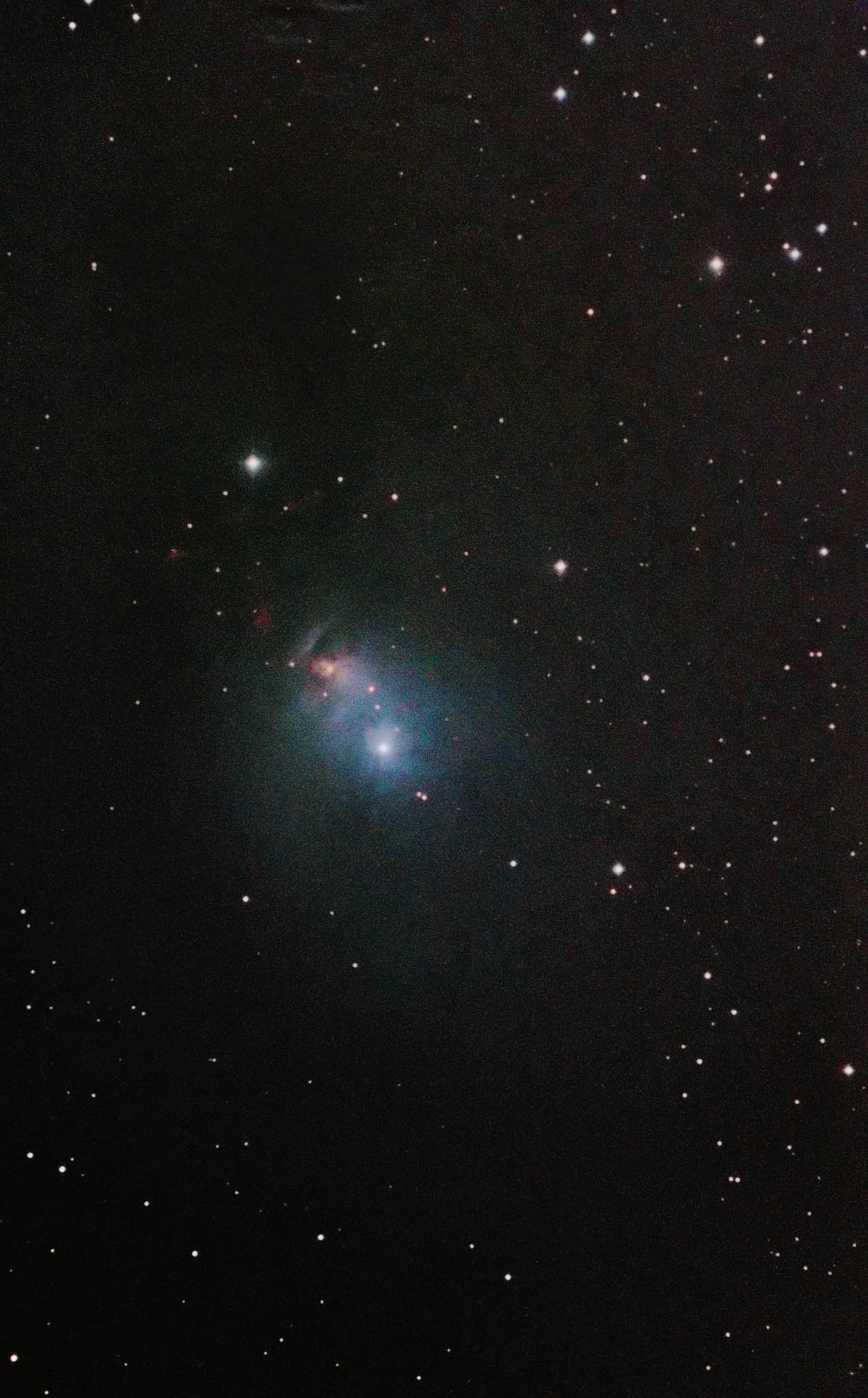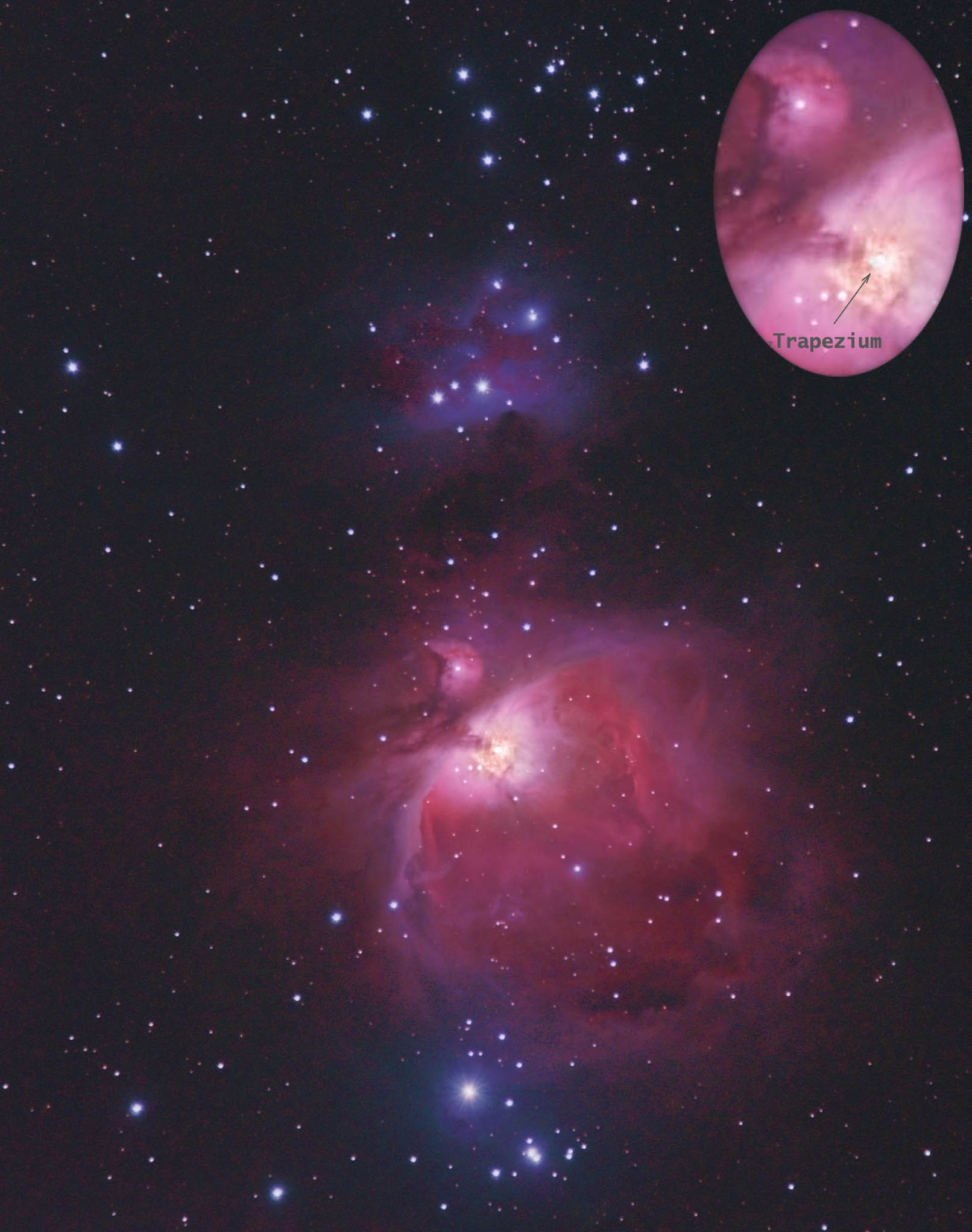
235:M42 Great Orion Nebula and NGC1977 Running Man Nebula – 2013/03/02

The Trapezium is seen at the center of M42. Gadgets: Sigma Telephoto lens 150-500mm at 500mm FL, with two EOSs, EOS Rebel XSI and T3, both modded, 0.5,2,4,8 minute exposures (4~8 frames each) at ISO1600 with XSI and Orion SkyGlow filter and, 2 min. x 25 frames at ISO3200 with EOS Rebel T3 with IDAS LPF P2 Note 8 minutes frames were discarded due to drift. The processing was not easy due to the difference in the transmission spectra between the Orion and the IDAS filters.
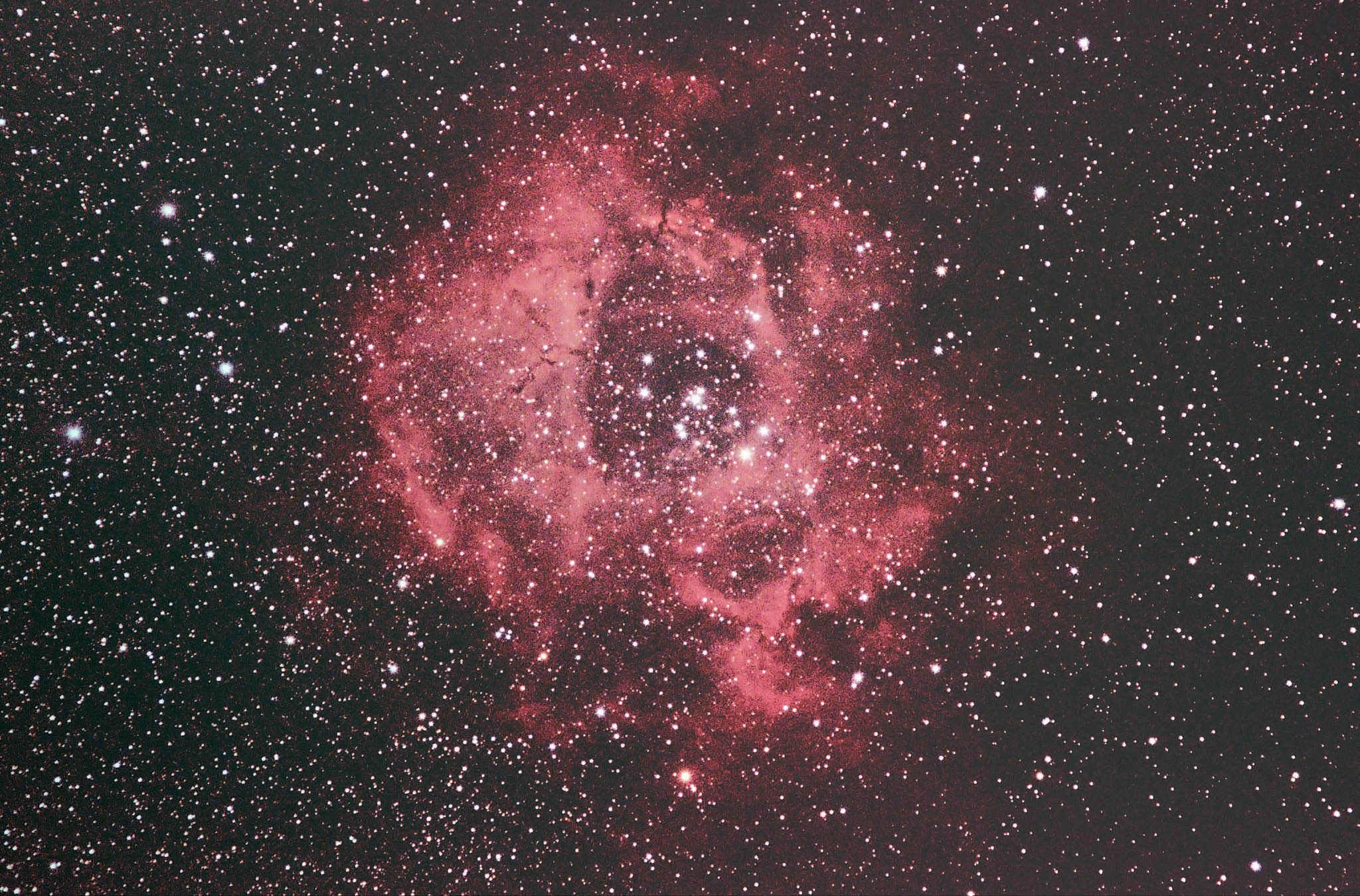
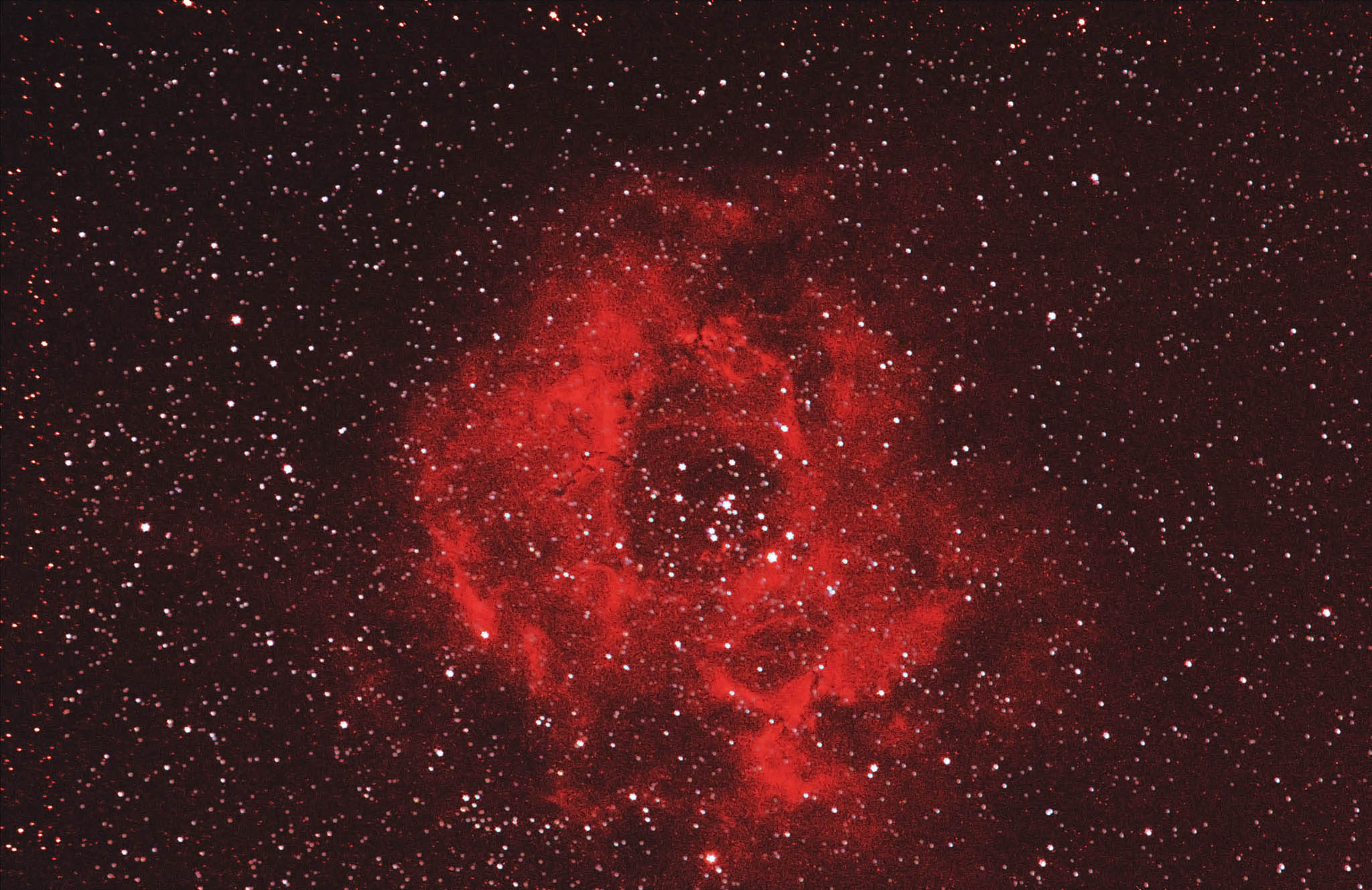
231:NGC2237-9 Rosette Nebula – 2013/02/13

光害カットフィルターと ルミコンH−アルファフィルターの併用 Sigma Telephoto Zoom Lens of 150-500mm FL at 500mm, Canon EOS Rebel T3, self modded, ISO3200, Exposure time 2 minutes, 27 lighs, and 20 darks and flats each, Lumicon H-Alpha filter with IDAS IPS P2 filter, combined together, being used as a semi-narrow band filter. The transmission wave length is between 635 nm and 680nm , roughly 45nm band width at the half peak. Note the H-Alpha peak is 656 nm. Refer to http://www.sciencecenter.net/hutech/idas/filtplt.htm for LPS P2 and http://www.astrosurf.com/buil/filters/curves.htm for Lumicon H-Alpha pass filter (this filter is a low pass filter, not a band pass filter). The star images were superimposed with the shots (45 seconds exposure frames) taken without the Lumicon filter

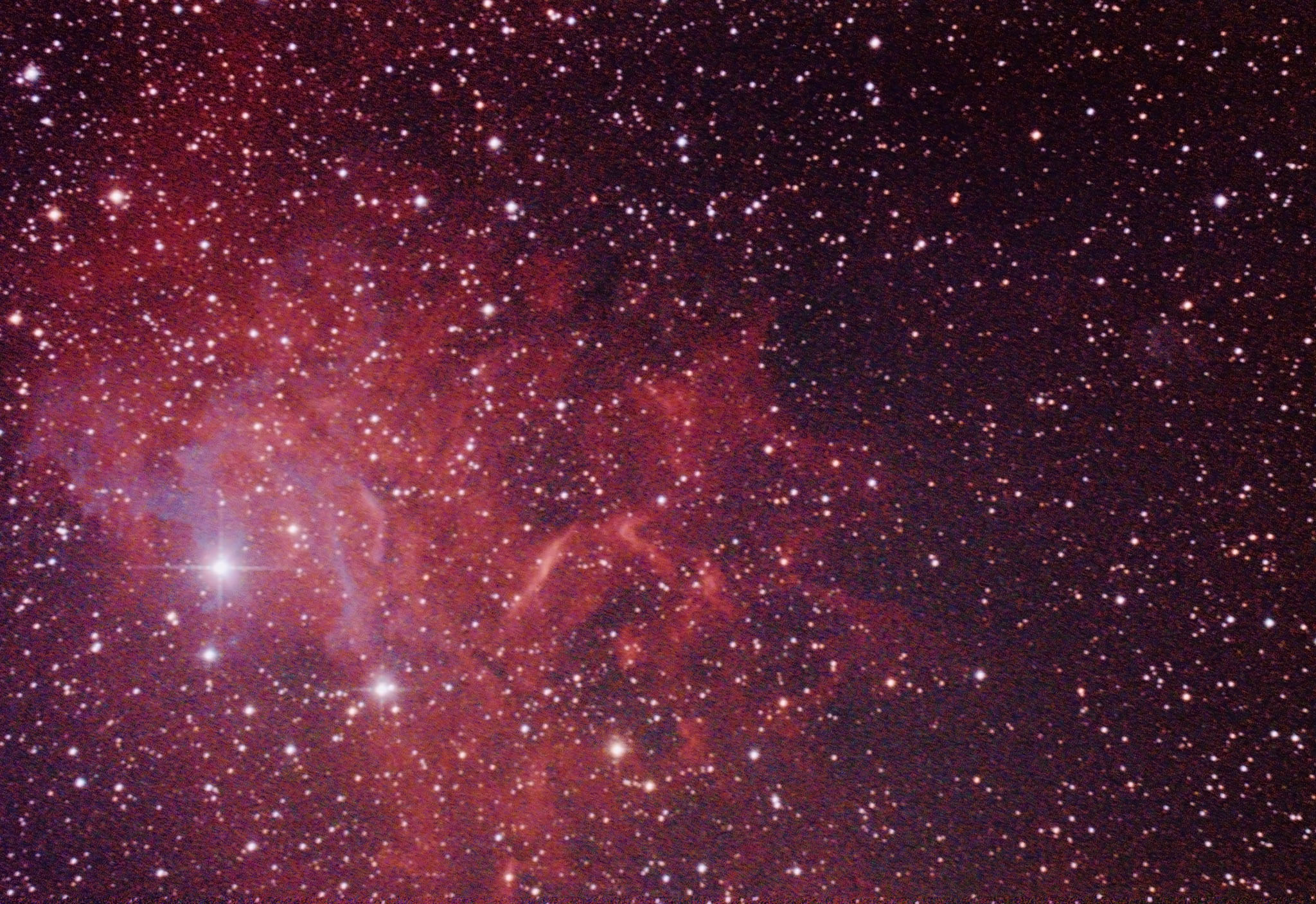
229:IC405 The Flaming Star Nebula – 2013/01/15

Emission/Reflection Nebula, being bombarded by the UV light by AE Aurigae, the brightest star in this photo. AE Aurigae was originated near or at the Orion M42 and is passing now through IC405. Refer to: http://en.wikipedia.org/wiki/IC_405 for detail. 1/15/2013 from Sunnyvale, Same scopes and EOS Rebel T3 (1100D or Kiss X50) 33 light frames ISO 3200 and 90 seconds Exposure APOD http://apod.nasa.gov/apod/ap031124.html