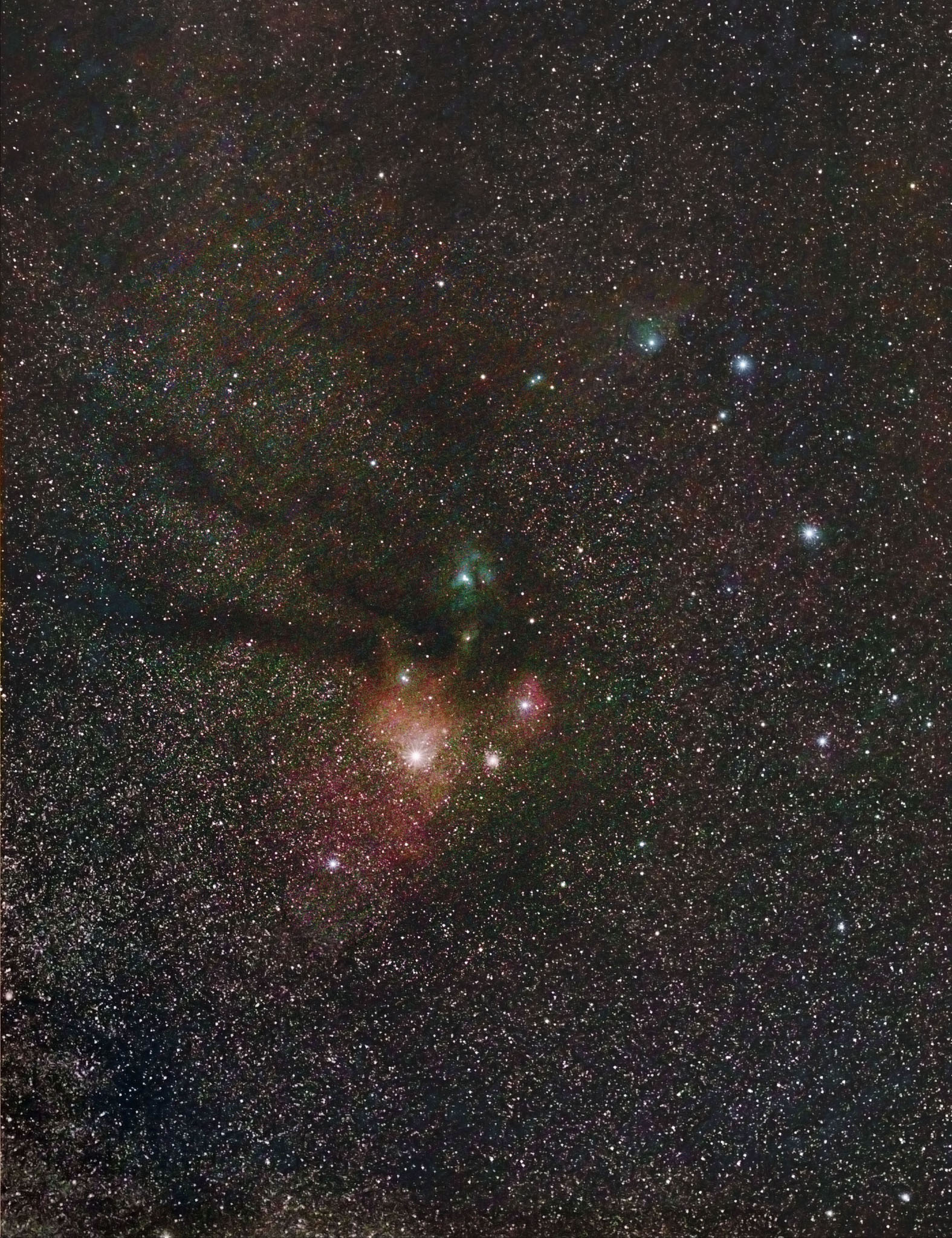
248:Antares Region アンタレス近傍 – 2013/07/04

さそり座の赤い星アンタレス近傍, 北カリフォルニアより 6/28/2013 Antares Region, shot from Sunnyvale California ISO1600, 20 seconds/frame, 120 frames, cumulative exposure of 40 minutes  Nikkor 50mm Standard Lens, Camera EOS KISS X2 (Rebel XSi) on EQ mount Halpha image, generated with 40 frames of 40 seconds exposure with Lumicon Ha filter and IDAS KLPS-P2 combined as an effective Ha filter  正式には「へびつかい座ロー(ギリシャ文字のρ)星雲複合体、Rho Ophiuchi cloud complex」で、ロー星は写真の白っぽい星雲の左中心の星。ロー星とその周りと東(左)に流れる暗黒帯が活動的な星形成の領域だそうで、研究対象として着目されてる天体。赤い領域は見た目華やかだがただ輝いてるだけの領域みたい。 光害地からの撮影はコマ数を稼ぐべしと言いながら最近何も出してないので、ちょうど Nikon Fの50mm標準レンズも使えそうになったことだし、このレンズの画角の絶好の対象、アンタレス付近を120枚撮りした。3等星までしか見えない自宅からは撮れないとずっと思ってたが、やってみるもの。上級は暗いところへ出かけて冷却CCDで20〜30分露光を何コマか撮ってるようだ。個人的には天体を被写体としてより物理的に見たいのだが勉強のほうは進まなくて写真撮りに傾斜。アンタレス近傍は天体写真趣味人に人気の対象。
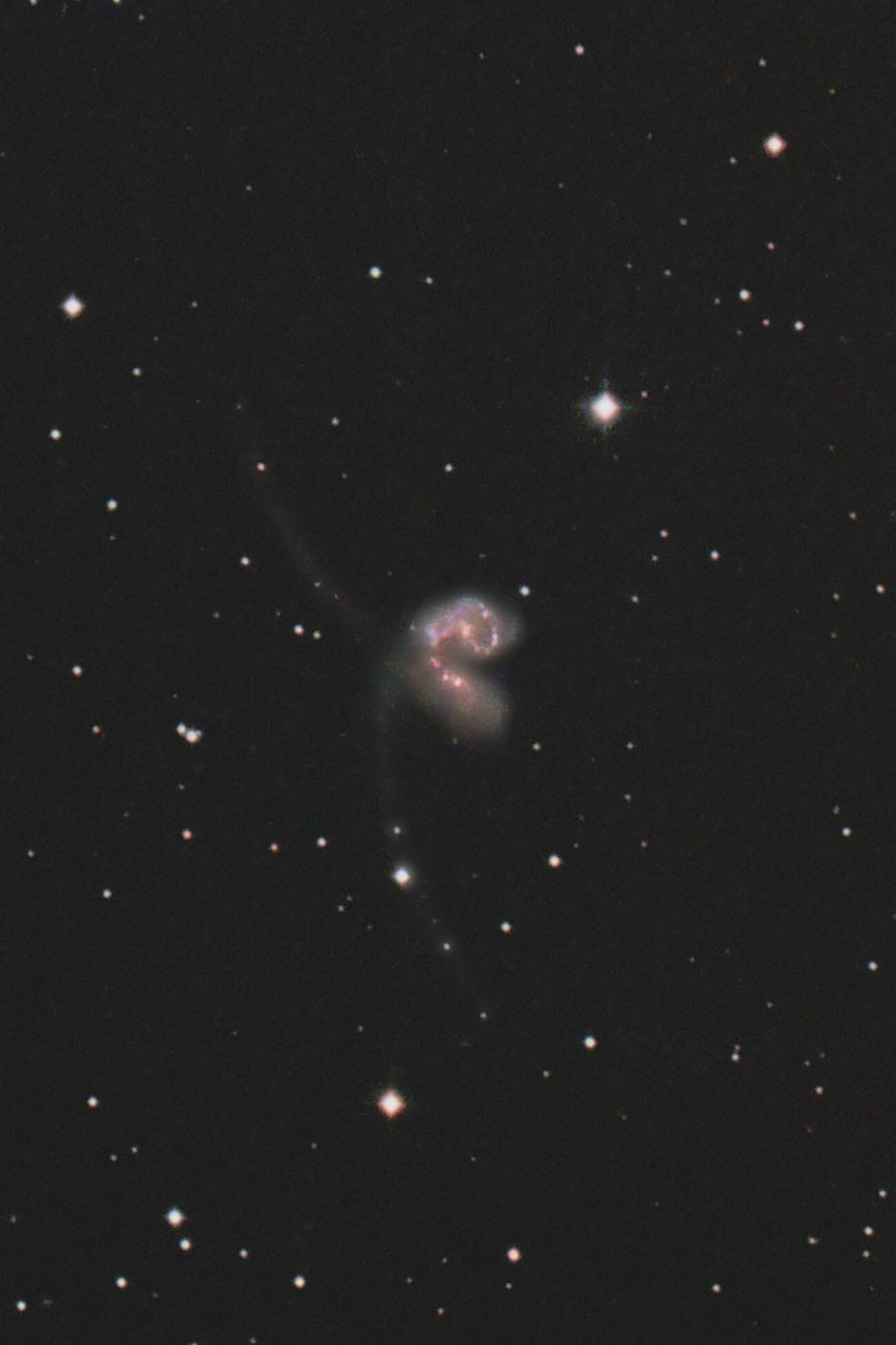
246:NGC 4038/4039 The Antennae Galaxies in Corvus アンテナ銀河 からす座− 衝突する2つの銀河 – 2013/06/06

VC200L (Reducer) and self-modified EOS REBEL XSI(450D), guided by 80mm tube with PHD guiding and Meade DSI PRO II, on Sirius EQ-G 40 lights at ISO1600 and 3 min. Exposure each, totaling 2 hours, 20 darks and 20 lights, stacked with DSS(DeepSkyStacker), processed with PS CS5 + Carboni Tool, Noise Ninja and FlatAid VC200L+自己改造EOS KISS X2、ISO1600, 2時間積算露光(3分x40枚)。 自宅 サニーベール、北カリフォルニアよりの撮影 6/3/2013。 撮影で、腕とか尾を出すのは難しい。この銀河は低高度で光害の影響がきつく、アンテナ(ひげ状雲)を出すのが難しい。これが将来起こるアンドロメダと天の川の衝突に近いとすると、太陽系は衝突面前面の星形成領域(つぶつぶ)に吸い込まれてしまいそう。もう楕円がずいぶん歪んでしまってる。

245:M106  – 2013/05/12

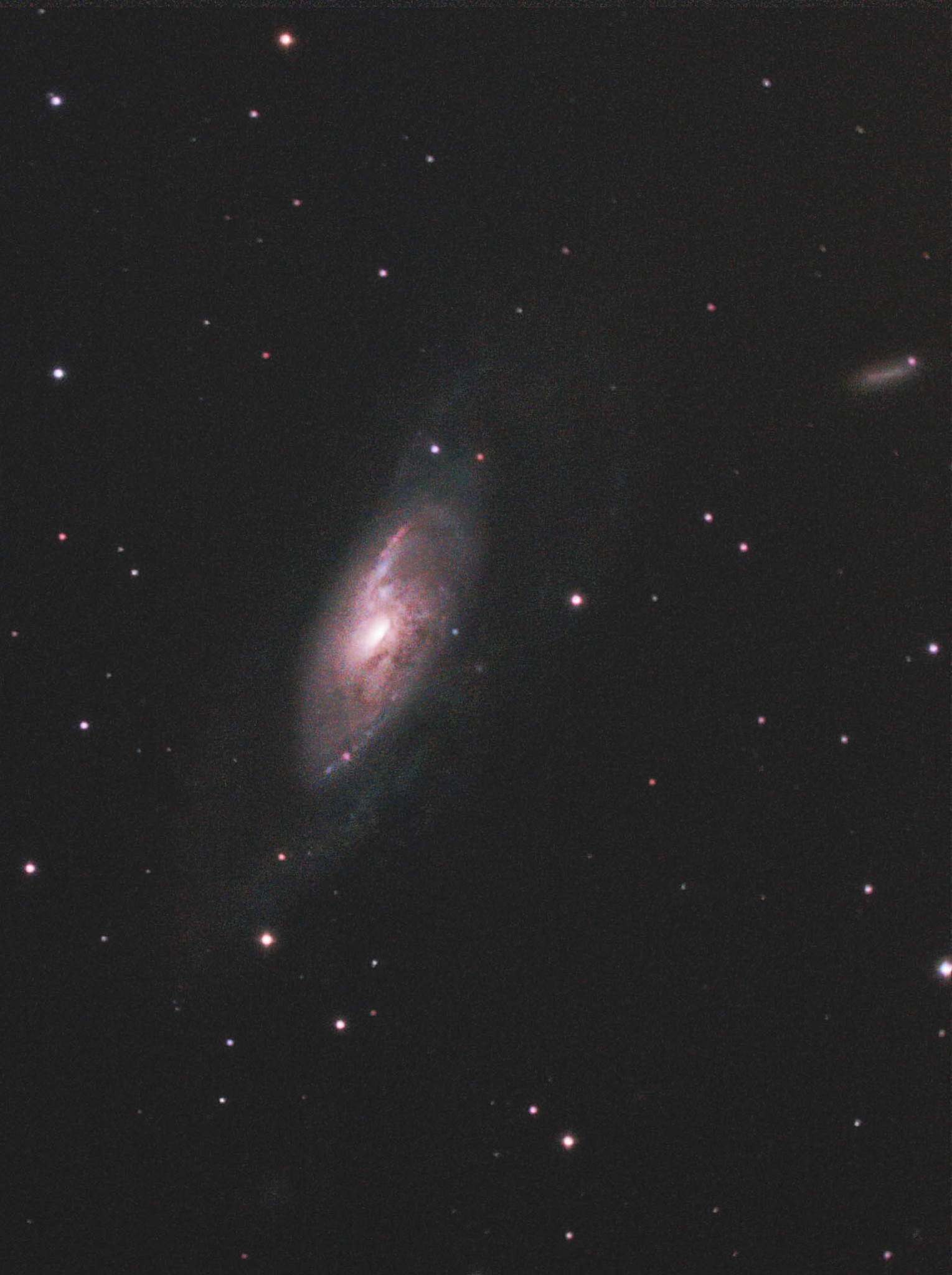
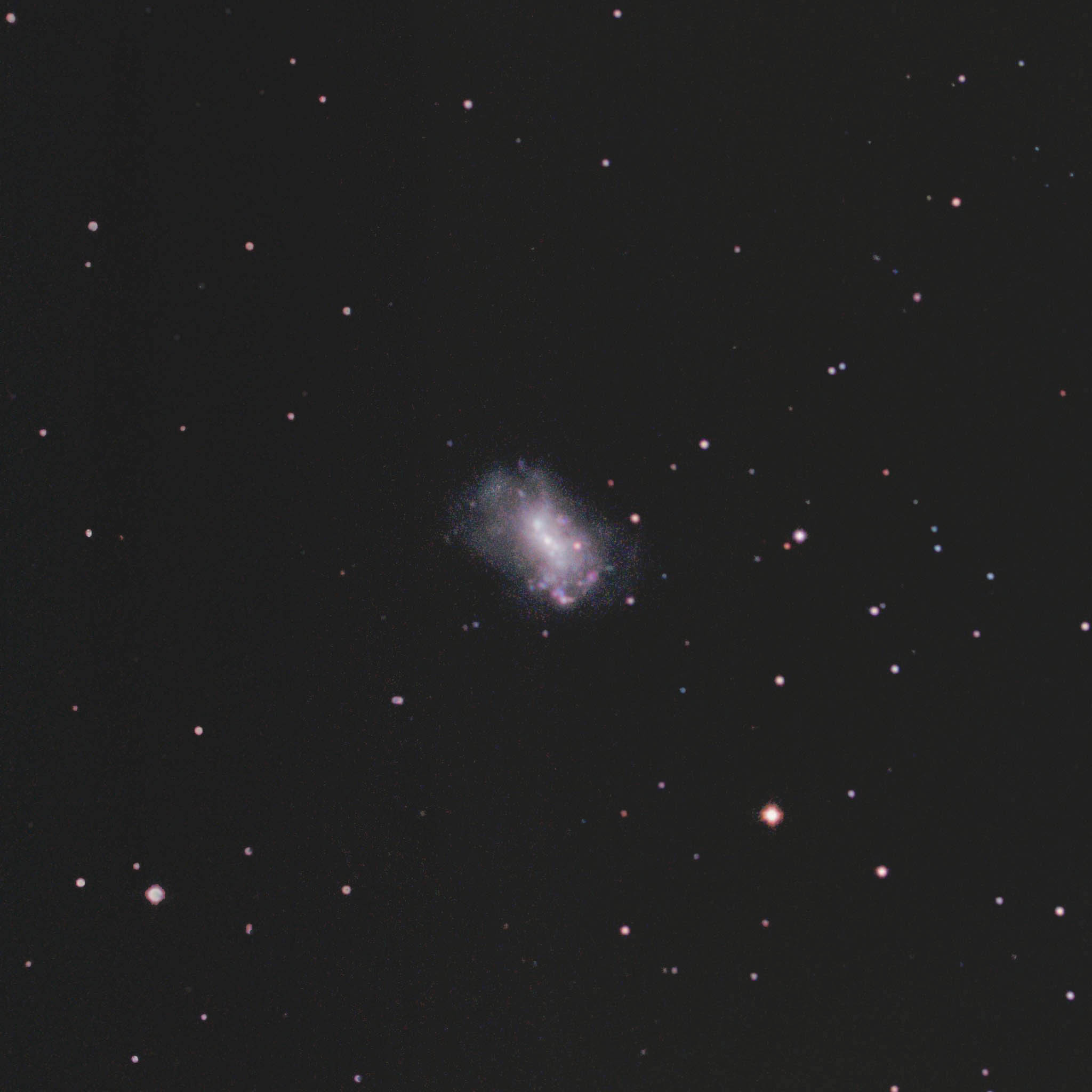
M106 (also known as NGC 4258), north is up. A spiral galaxy in the constellation Canes Venatici 5/12/2013 from Sunnyvale, CA USA shot with VC200L(with reducer) + Canon EOS XSi (KISS X2), self modified (自己改造). guided with Orion 400mm FL scope, Meade DSI Pro Color 2 and PHD guiding on Sirius EQ-G, ISO1600, 3 min. Exp, 55 lights, 20 darks and 20 flats, total exposure 3 hours (総露光3時間) りょうけん座にある渦巻銀河。20’x 8.5′ の大きさで8.4 光度の大きな美しい天体だが、あまりポピュラーでない。写真も最外縁が淡くて難しい。右側の天体はNGC 4248。 数時間露光で滑らかになりそうだか、、、、。 Hubble 撮影写真は以下参照。 http://apod.nasa.gov/apod/ap130206.html

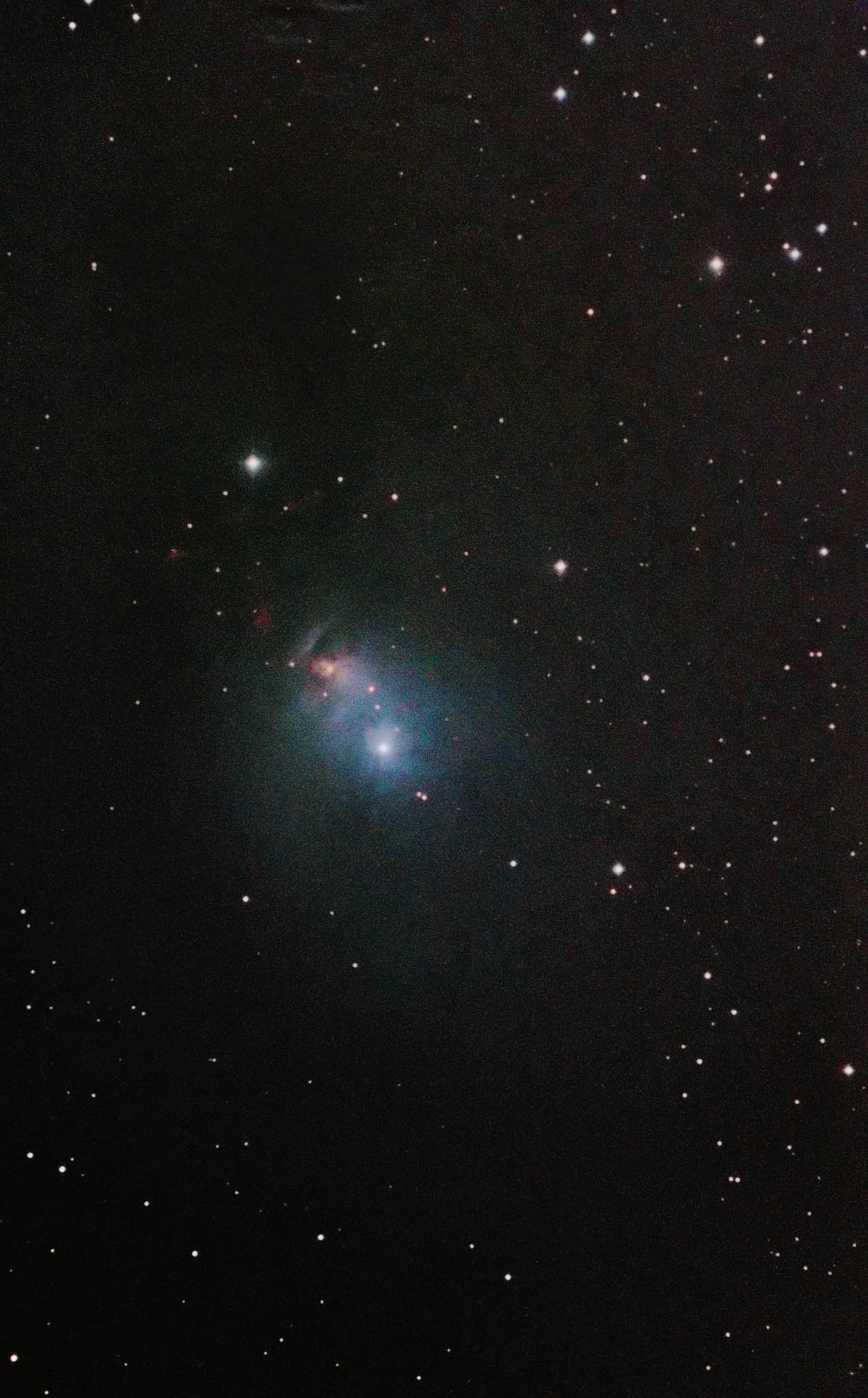
240:Barnard’s Loop and the nebulae in the Orion Constellation – 2013/03/15

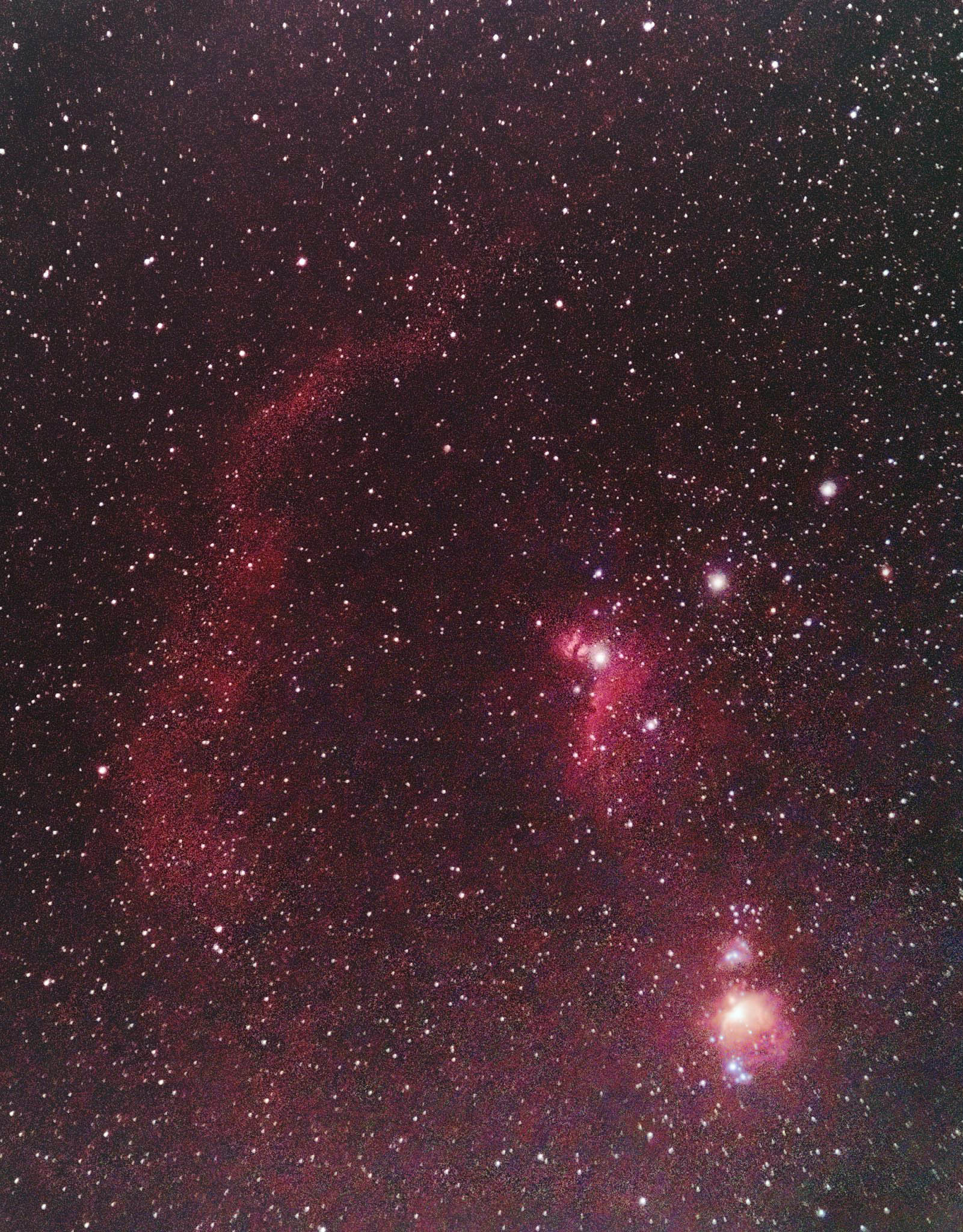
Trial shooting to evaluate the performance of semi-narrow band filter, utilizing IDAS LPF-P2 and Lumicon H-alpha filters. ———————————————– The cutoff wave length of the Lumicon filter is 635 nm while the cutoff of the infra-red region by LPF-P2 occurs at 685~690 nm. Thus these two filters passes the spectrum of 35nm width. ーーーーーーーーーーーーーーーーーーーーーーーーーーーー IDAS LPF-P2 and Lumicon H-alphaを利用したHアルファフィルターの性能テスト  ーーーーーーーーーーーーーーーーーーーーーーーーーーーー Kit Zoom lens (35-80mm for film EOS REBEL) at 80mm FL Session 1: 20 frames with IDAS LPF-P2 at ISO1600, 60 seconds of EOS REBEL T3 Session 2: 10 frames with Lumicon H-alpha filter and LPF-P2 filter at ISO3200, 180 seconds of EOS REBEL T3 20 darks and 20 flats for each session ————————————- It appears these two filters combined together can filter out the city lights to a certain extent, enhancing the contrast of the image.

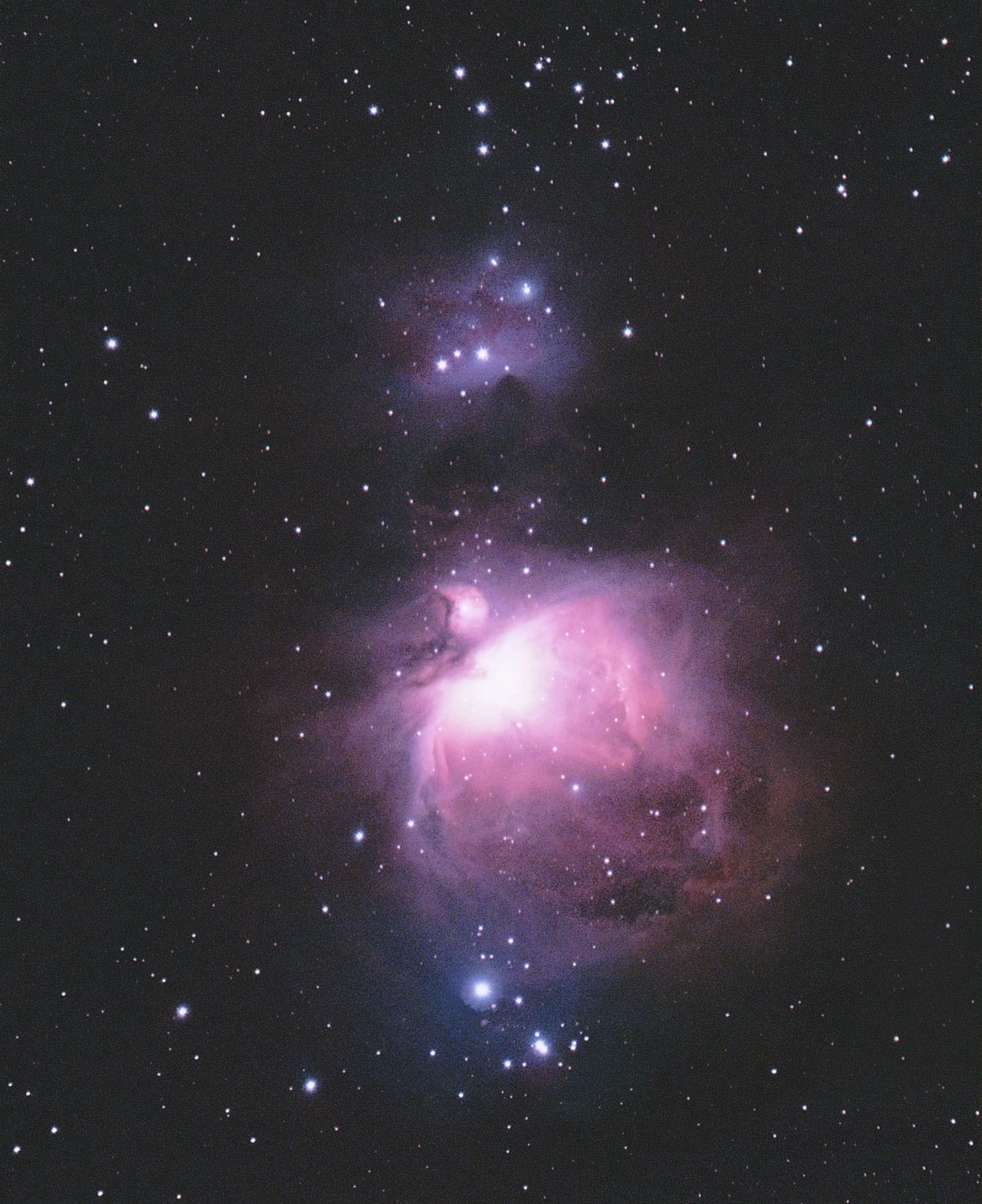
235:M42 Great Orion Nebula and NGC1977 Running Man Nebula – 2013/03/02

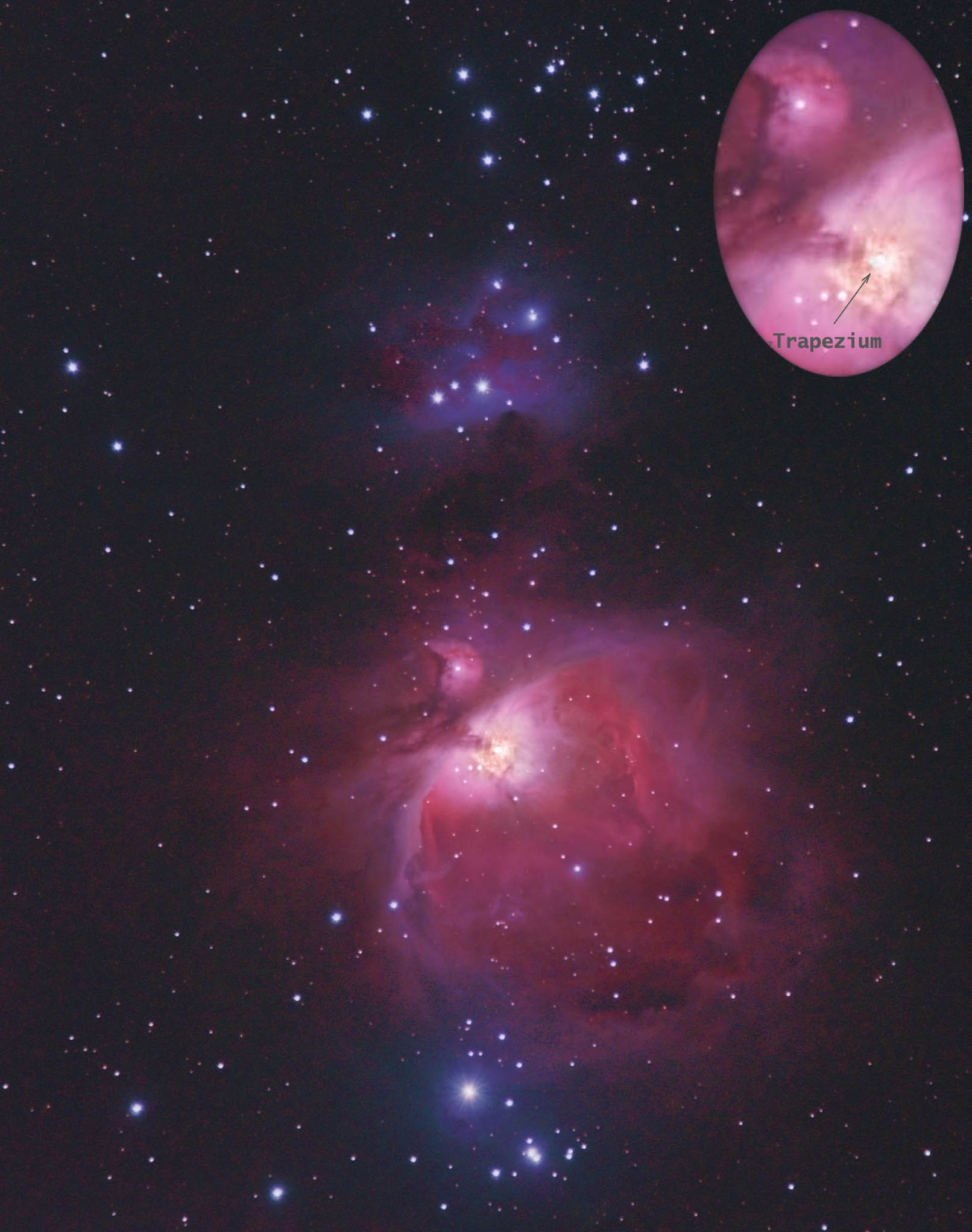
The Trapezium is seen at the center of M42. Gadgets: Sigma Telephoto lens 150-500mm at 500mm FL, with two EOSs, EOS Rebel XSI and T3, both modded, 0.5,2,4,8 minute exposures (4~8 frames each) at ISO1600 with XSI and Orion SkyGlow filter and, 2 min. x 25 frames at ISO3200 with EOS Rebel T3 with IDAS LPF P2 Note 8 minutes frames were discarded due to drift. The processing was not easy due to the difference in the transmission spectra between the Orion and the IDAS filters.

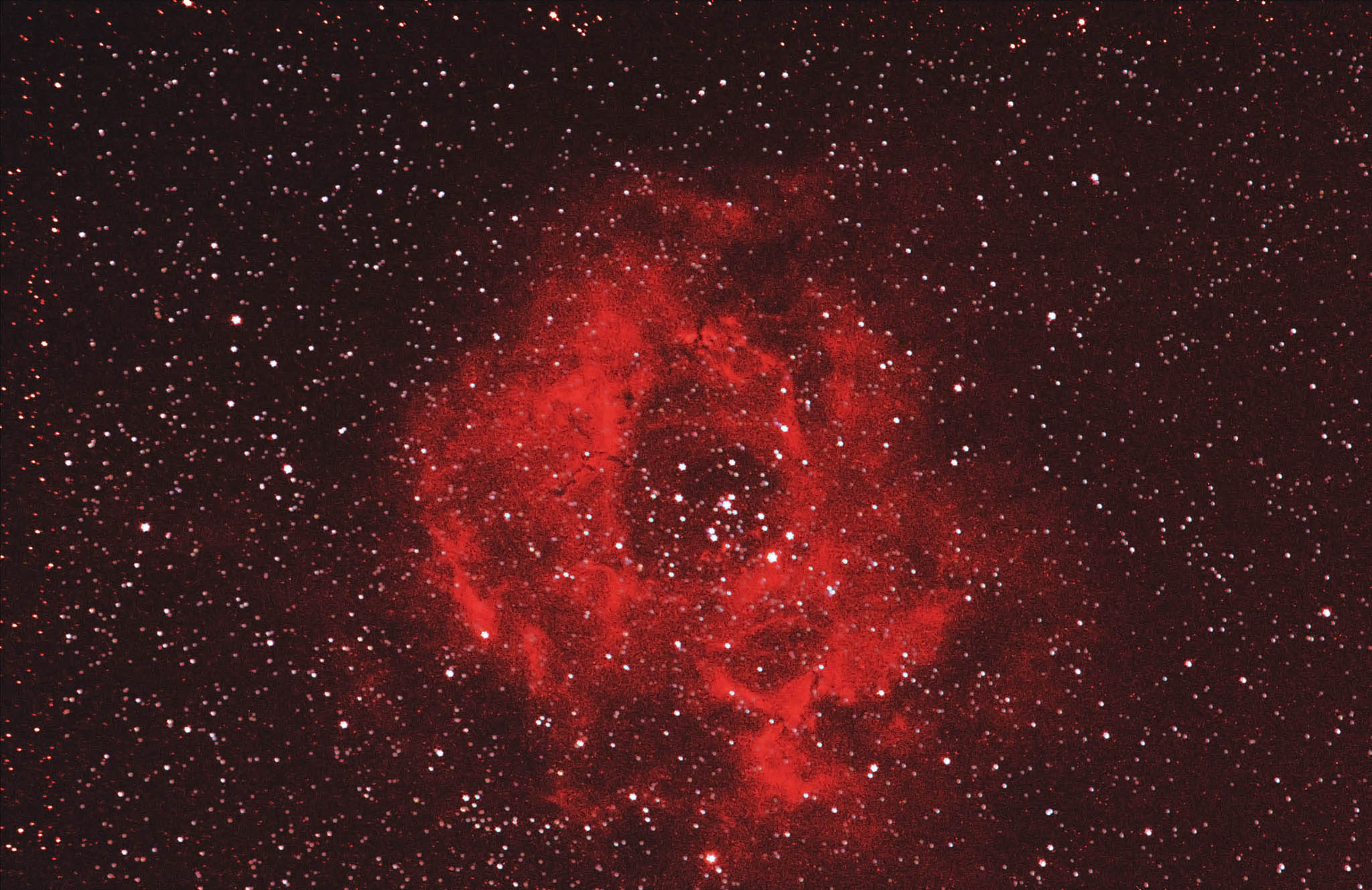
231:NGC2237-9 Rosette Nebula – 2013/02/13

光害カットフィルターと ルミコンH−アルファフィルターの併用 Sigma Telephoto Zoom Lens of 150-500mm FL at 500mm, Canon EOS Rebel T3, self modded, ISO3200, Exposure time 2 minutes, 27 lighs, and 20 darks and flats each, Lumicon H-Alpha filter with IDAS IPS P2 filter, combined together, being used as a semi-narrow band filter. The transmission wave length is between 635 nm and 680nm , roughly 45nm band width at the half peak. Note the H-Alpha peak is 656 nm. Refer to http://www.sciencecenter.net/hutech/idas/filtplt.htm for LPS P2 and http://www.astrosurf.com/buil/filters/curves.htm for Lumicon H-Alpha pass filter (this filter is a low pass filter, not a band pass filter). The star images were superimposed with the shots (45 seconds exposure frames) taken without the Lumicon filter