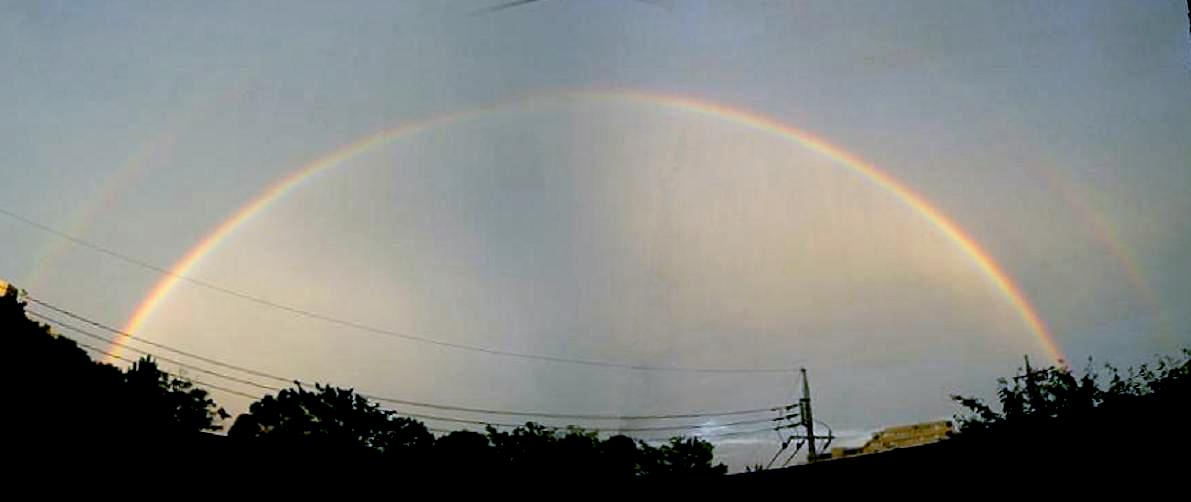
星雲写真は色々処理をするので、技法の一部を応用してみました。 右の空の色が「泥」色で、カリフォルニアの空はかり見てる者にとっては違和感があるので、ブルーがかった左の空に統一しました。 勝手な変更です。 失礼! それにしても、完全半円弧、二重虹ですね。 東京でよく見えましたね。
星雲写真は色々処理をするので、技法の一部を応用してみました。 右の空の色が「泥」色で、カリフォルニアの空はかり見てる者にとっては違和感があるので、ブルーがかった左の空に統一しました。 勝手な変更です。 失礼! それにしても、完全半円弧、二重虹ですね。 東京でよく見えましたね。
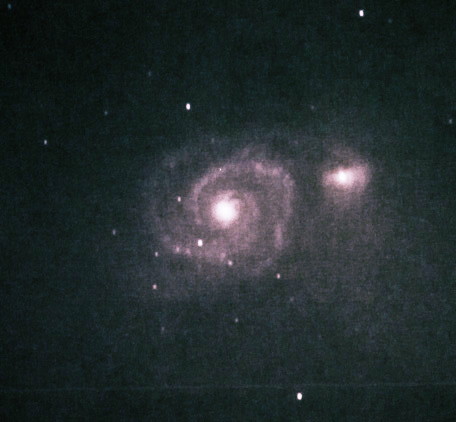
Vixen VC200L EOS KISS X3 ISO 3200 No guide, stacked 3×120 Seconds Exposure The experienced astrophotographers produce better photos of M51 by using VC200L telescope. 子持ち銀河は1773年10月13日にシャルル・メシエが発見した。しかしこのとき、メシエは伴銀河は発見していない。伴銀河はピエール・メシャンが1781年に発見した。 子持ち銀河は明るい銀河で双眼鏡でも観測できるためアマチュア天文家にも人気が高い。双方の銀河を結ぶ腕は口径10cm程度の望遠鏡でも見えるという人もいる。 (Wikipedia より) (注)これは初心者の写真です。熟練天文写真家はより高質の写真を撮ります。 The Whirlpool Galaxy (also known as Messier 51a, M51a, or NGC 5194) is an interacting[4] grand-design[5] spiral galaxy located at a distance of approximately 31 million light-years in the constellation Canes Venatici. It is one of the most famous spiral galaxies in the sky.[citation needed] The galaxy and its companion (NGC 5195) are easily observed by amateur astronomers, and the two galaxies may even be seen with binoculars.[6] The Whirlpool Galaxy is also a popular target for professional astronomers, who study it to further understanding of galaxy structure (particularly structure associated with the spiral arms) and galaxy interactions. (From Wikipedia)
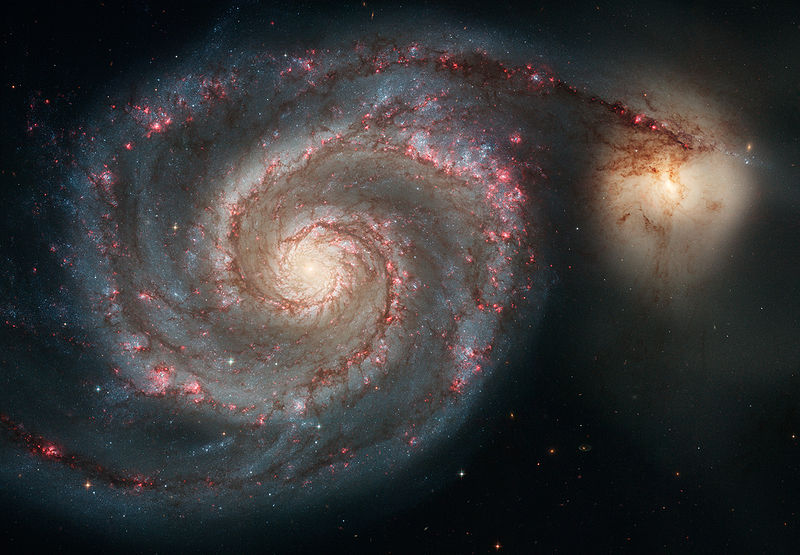
Photo by Hubble NASA/courtesy of nasaimages.org
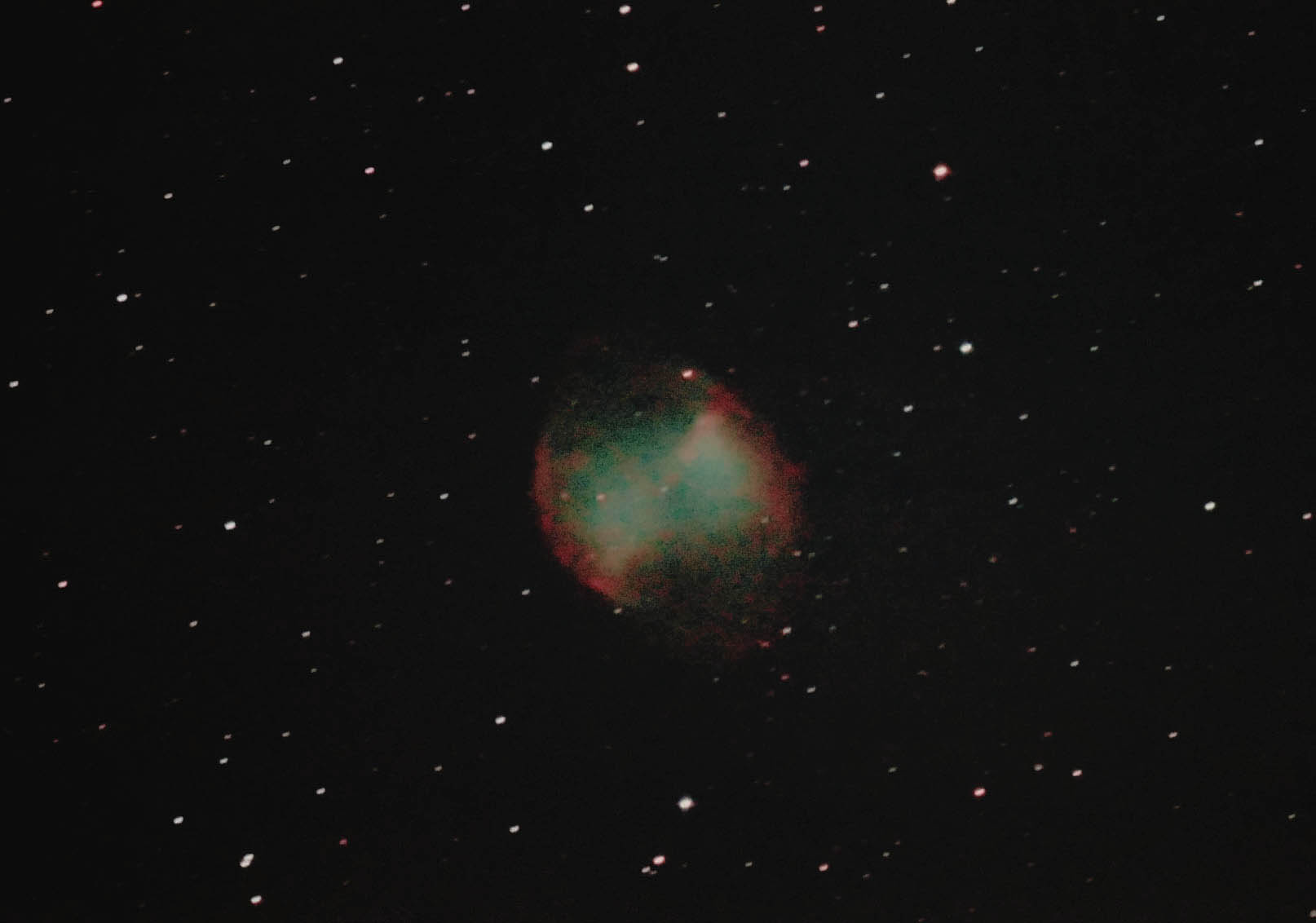
reprocessed on 4/23/2013
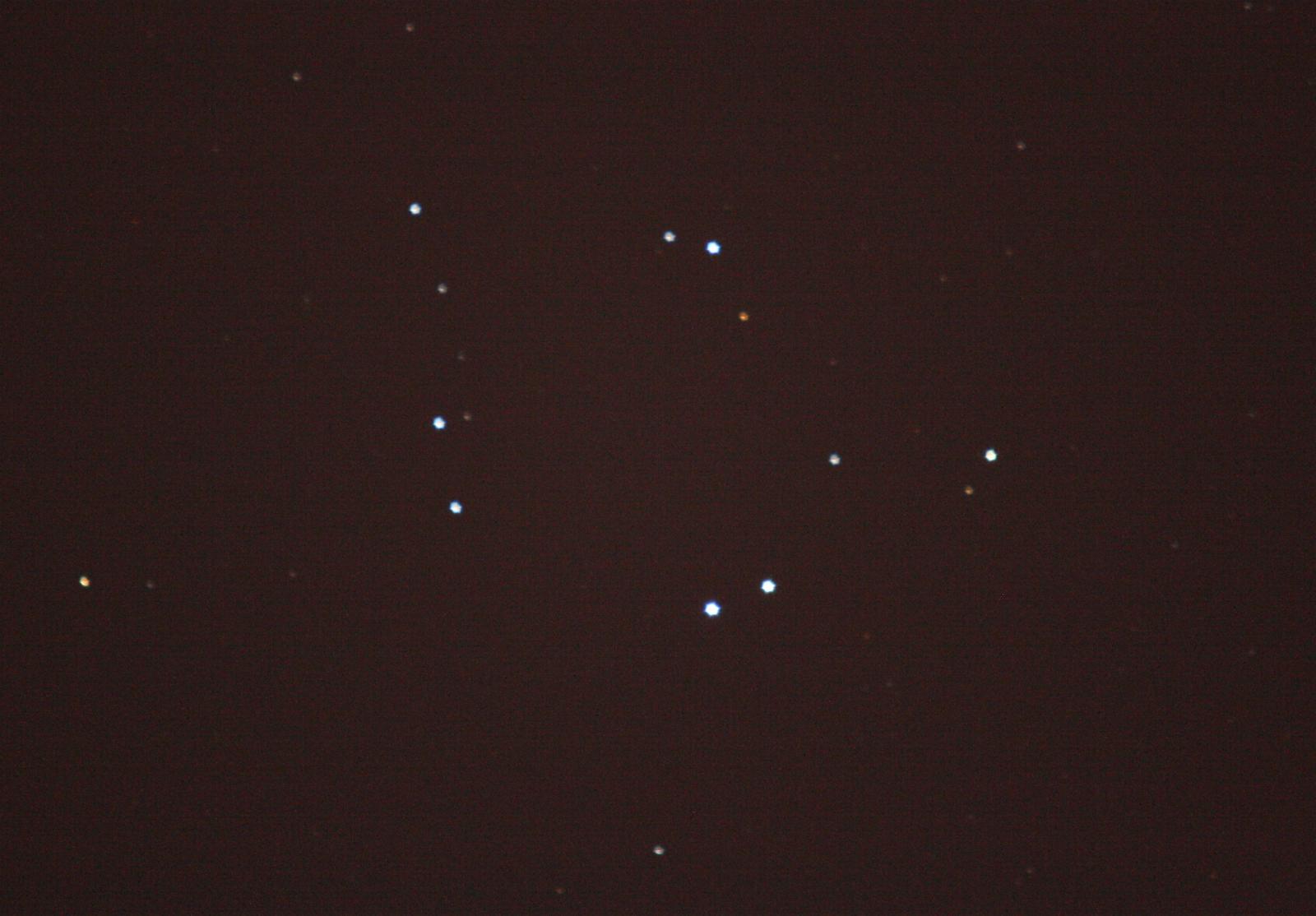
ヒアデス星団(M25 – Hyades)はおうし座にある散開星団。一等星アルデバランの近傍に広がるV字形の星の集団で、おうし座の顔の位置にある。日本ではその形状から釣鐘星(つりがねぼし)と呼ばれていた。 Wikipedia より
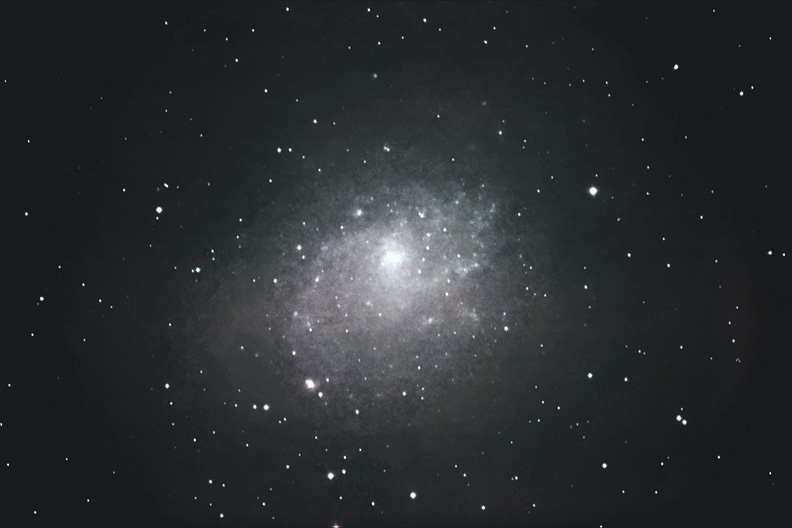
Vixen VC200L with the Reducer EOS Rebel T1i (KISS X3 in Japan) SkyGlow filter (LPF) 11 x 120 seconds exposures ISO 3200 5 dark frames DeepSkyStacker, Photoshop Elements 7 Noise Ninja Original size 4752 x 3168 pixels, resized to 792 x 508
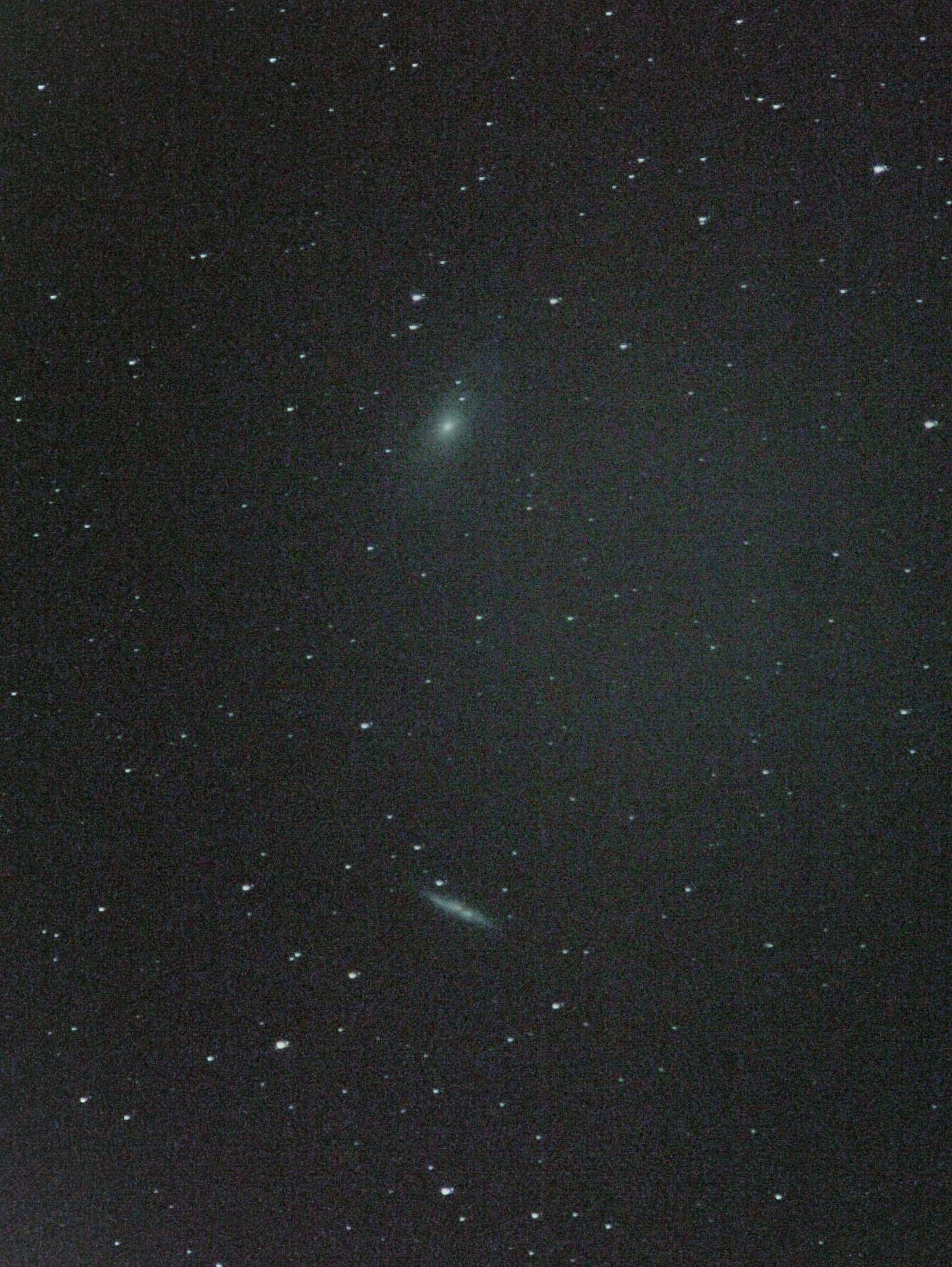
Messier 81 (NGC 3031 or Bode’s Galaxy) is a spiral galaxy about 12 million light-years away in the constellation Ursa Major. M81 is one of the most striking examples of a grand design spiral galaxy, with near perfect arms spiraling into the very center. Because of its proximity to Earth, its large size, and its active galactic nucleus (which harbors a supermassive black hole) Messier 81 is a popular galaxy to study in professional astronomy research. The galaxy’s large size and relatively low apparent magnitude (lower magnitude implies higher brightness) also make it a popular target for amateur astronomy observations. Messier 82 (NGC 3034 or the Cigar Galaxy) is the prototype nearby starburst galaxy about 12 million light-years away in the constellation Ursa Major. The starburst galaxy is five times as bright as the whole Milky Way and one hundred times as bright as our galaxy’s center.
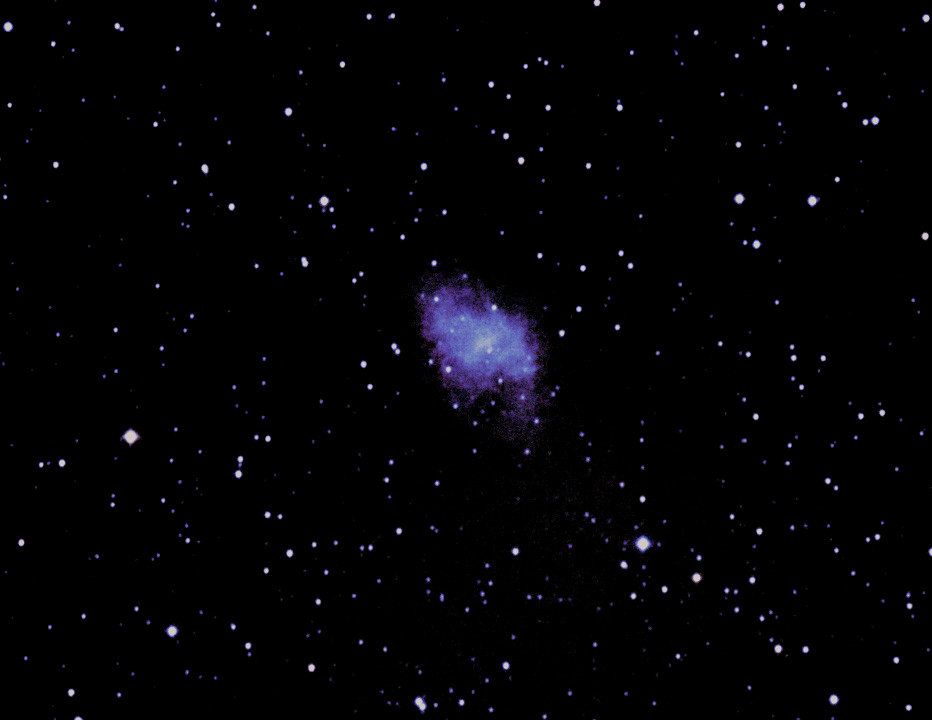
M1, Crab Nebula (NGC 1952), is a supernova remnant and pulsar-wind-nebula in the constellation of Taurus. The nebula was first observed by John Bevis in 1731, and is same as a bright supernova recorded by Chinese and Arab astronomers in 1054. At the center of the nebula lies the Crab Pulsar, a rotating neutron star, which emits pulses of gamma rays to radio waves with a spin rate of 30.2 times per second. The nebula was the first astronomical object identified with a historical supernova explosion. Vixen VC200L (200mm diameter 1800mm focal Length) w/o reducer EOS T1i (KISS X3 in Japan) 21 frames of the 60 seconds Exposure at ISO of 3200, stacked with DeepSkyStacker, retouched with Adobe Photoshop Elements 7 and noise-reduced with Noise-Ninja. 12/22/2009 in Sunnyvale California USA M1 かに星雲 (NGC 1952) はおうし座にある超新星残骸で、 地球からの距離はおよそ7000光年。現在も膨張を続けており、 中心部にはパルサーの存在が確認され、かにパルサーと呼ばれている。 超新星自体は中国の記録『宋史』「天文志」に客星 (1054年に突然現れた明るい星)として記され、 日本でも、藤原定家が自身の日記『明月記』に記録をひいている。 また著者不詳の『一代要記』にも記録が残っている。 超新星の出現当時は、金星ぐらいの明るさになり、 23日間にわたり昼間でも肉眼で見えたと言われ、 夜間は後2年間見えていたと推定される。
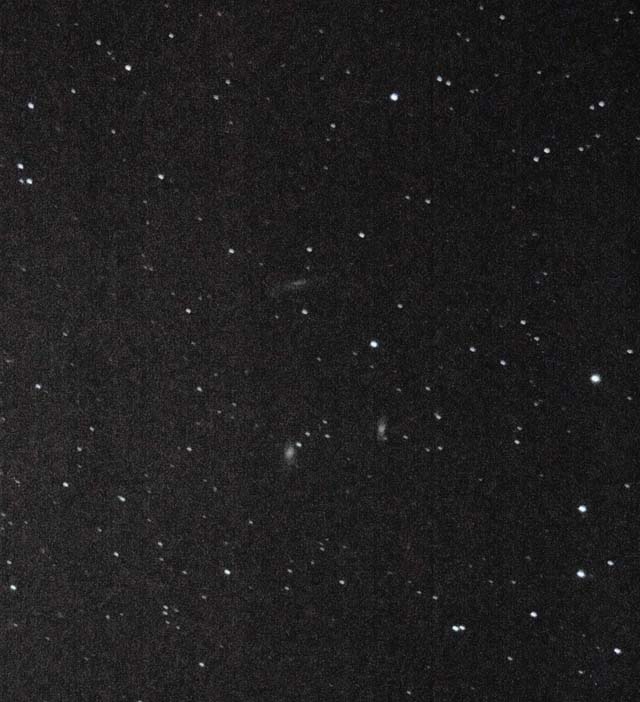
Messier 65 (also known as NGC 3623) is an intermediate spiral galaxy about 22 million light-years away in the constellation Leo. It was discovered by Charles Messier in 1780. M65, M66, and NGC 3628 comprise the famous Leo Triplet, a small group of galaxies. Messier 66 (also known as NGC 3627) is an intermediate spiral galaxy about 36 million light-years away in the constellation Leo. It was discovered by Charles Messier in 1780. M66 is about 95 thousand light-years across[3] with striking dust lanes and bright star clusters along sweeping spiral arms. NGC 3628 is an unbarred spiral galaxy about 35 million light-years away in the constellation Leo. It was discovered by William Herschel in 1784. It has an approximately 300,000 light-years long tidal tail. NGC 3628 along with M65 and M66 form the famous Leo Triplet, a small group of galaxies. Its most conspicuous feature is the broad and obscuring band of dust located along the outer edge of its spiral arms, effectively transecting the galaxy to our view.
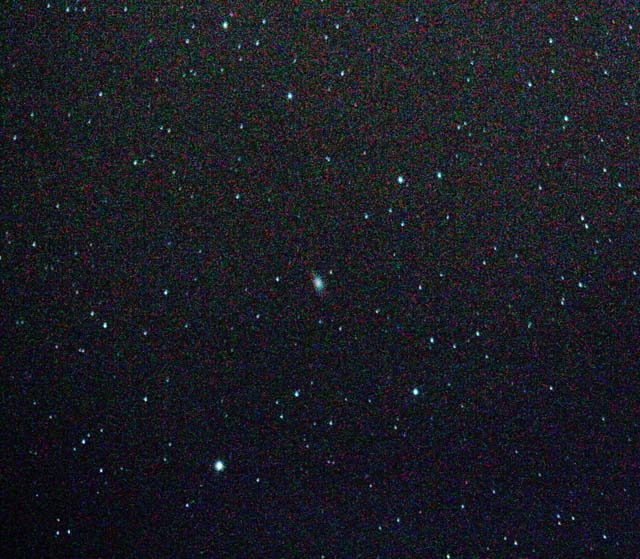
The Black Eye Galaxy (also called Sleeping Beauty Galaxy; designated Messier 64, M64, or NGC 4826) was discovered by Edward Pigott in March 1779, and independently by Johann Elert Bode in April of the same year, as well as by Charles Messier in 1780. It has a spectacular dark band of absorbing dust in front of the galaxy’s bright nucleus, giving rise to its nicknames of the “Black Eye” or “Evil Eye” galaxy. M64 is well known among amateur astronomers because of its appearance in small telescopes. It is a spiral galaxy in the Coma Berenices constellation.